
Public restrooms in high-traffic facilities face daily abuse—from accidental impacts and heavy use to intentional vandalism—that can rapidly degrade lower-quality partition materials. Phenolic partitions feature a solid, compressed resin core that delivers superior surface resistance compared to common alternatives like laminate, painted steel, or wood. Their density resists deep scratches from sharp objects, dents from slamming doors or forceful contact, and permanent graffiti marks. Unlike surface-coated materials that chip or peel when damaged, phenolic partitions maintain consistent color and structural integrity through their entire thickness—so minor blemishes can often be buffed out without panel replacement. This inherent durability helps restrooms retain a clean, professional appearance between routine maintenance cycles.
Phenolic partitions demonstrate exceptional long-term reliability in demanding real-world environments. A 2023 industry survey of North American municipal facility managers found that phenolic installations in urban transit hubs showed less than 5% visible structural damage after 10 years of continuous 24/7 use—significantly outperforming powder-coated steel (22% damage) and high-density polyethylene (18% damage) [Mills 2023]. Similarly, large stadiums hosting 50+ annual events report no warping, delamination, or mounting failures in phenolic systems over multi-year deployments. This consistency reduces unplanned repairs, minimizes operational downtime, and extends service life—making phenolic a dependable investment for facilities where reliability is non-negotiable.
Humid restroom settings—such as those in gyms or aquatic centers—create ideal conditions for bacterial proliferation on stall surfaces. An independent 2022 hygiene study found non-porous phenolic partitions hosted 78% fewer surface bacteria after 24 hours of regular use than standard porous laminate, and 42% fewer than scratched stainless steel [Public Facilities Hygiene Association, 2022]. Micro-scratches on stainless steel trap moisture and microbes, while laminate absorbs humidity over time, forming hidden reservoirs for microbial growth. In contrast, phenolic’s dense, impermeable structure prevents bacterial infiltration below the surface—ensuring disinfectants work effectively on contact.
A 2023 field audit of 120 school and municipal gym restrooms across eight North American regions tracked five-year performance of common partition materials. Phenolic installations reported 91% fewer mold and mildew incidents than traditional laminate counterparts. Because phenolic does not absorb moisture from steam, cleaning, or spills, it never develops a damp internal layer conducive to fungal growth. Common restroom stains—including ink, soap scum, and body product residues—remain on the non-porous surface rather than penetrating inward. Most wipe away cleanly with standard cleaners, eliminating permanent discoloration and preserving visual quality in high-traffic environments.
Phenolic partitions meet critical building and safety requirements for commercial and municipal restrooms. They carry the widely recognized ASTM E84 Class A fire rating—limiting flame spread and smoke development during fire events per International Code Council standards [ICC, 2024]. Their solid, homogeneous construction supports secure, seamless integration of ADA-compliant hardware—including grab bars, door latches, and privacy devices—without compromising structural integrity. Phenolic also resists warping from chronic humidity exposure and degradation from routine cleaning chemicals, helping facilities sustain code compliance with minimal intervention.
Phenolic partitions deliver compelling long-term value: initial purchase costs represent only 20–30% of total ownership expense over 20 years, when factoring in labor, repairs, and premature replacements [National Association of State Facility Administrators, 2024]. Facilities report up to 40% reduction in annual cleaning labor—since most stains and graffiti remove easily with standard products, eliminating the need for aggressive scrubbing or refinishing. Combined with industry-leading 25-year warranties covering both structural and surface performance in high-traffic applications, phenolic delivers a 33% lower total lifecycle cost than lower-grade alternatives over two decades.
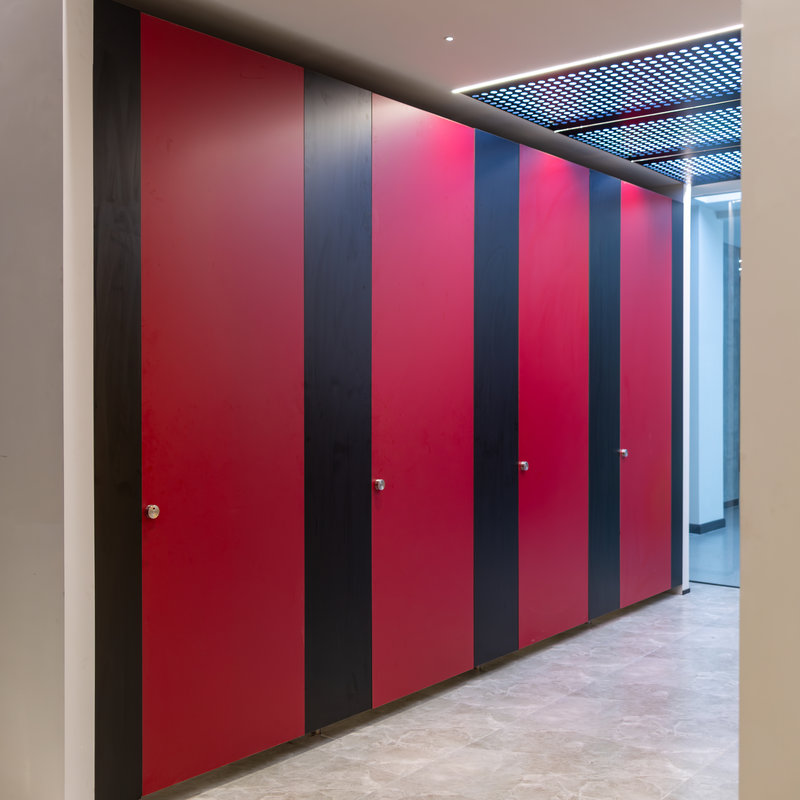
What makes phenolic partitions more durable than traditional materials? Phenolic partitions feature a dense, compressed resin core that resists scratches, dents, and permanent damage better than materials like laminate, painted steel, or wood. Their consistent color and structural integrity allow minor blemishes to be buffed out without replacement.
Are phenolic partitions resistant to mold and mildew? Yes, phenolic partitions are non-porous and do not absorb moisture, which prevents mold and mildew growth even in humid environments like gym and pool restrooms.
How do phenolic partitions handle heavy use in high-traffic areas? Phenolic partitions perform exceptionally well in high-traffic areas such as transit hubs and stadiums. They resist warping, delamination, and mounting failures over multi-year deployments, sustaining structural integrity and appearance for years.
Are these partitions fire safe? Yes, phenolic partitions comply with ASTM E84 Class A fire safety ratings, limiting flame spread and smoke production as per international safety standards.
What is the lifecycle cost of phenolic partitions? With their robust durability, low maintenance, and 25-year warranty, phenolic partitions deliver a 33% lower total lifecycle cost compared to other materials over a span of 20 years.

Since its establishment in 2001, Jialifu has been specializing in the design and manufacture of toilet cubicles, vanities, storage cabinets, IPS duct panels, and doors for commercial projects.
 EN
EN