When talking about public facilities or home bathrooms, the toilet stall is a key part that can’t be ignored. Its safety directly relates to users’ comfort and even health. As someone who has been engaged in bathroom renovation consulting for 8 years, I have encountered many cases where toilet stall materials caused problems. Once, a restaurant owner came to me complaining that the newly installed toilet stalls were moldy and smelly within half a year, making customers complain constantly. After checking, I found that the materials used didn’t meet moisture resistance standards. Such experiences made me realize how important it is to choose toilet stall materials that comply with safety regulations. Today, I will share with you which materials are reliable and what safety points we should pay attention to.
Reliable Materials for Toilet Stall
Phenolic resin is a star material that meets toilet stall safety standards. It is made by pressing multiple layers of kraft paper soaked in phenolic resin at high temperature and pressure. I recommended this material to a shopping mall that needed to renovate its public toilets. After two years of use, the toilet stalls are still in good condition, without deformation or discoloration even with heavy traffic every day. Phenolic resin has excellent moisture resistance, which can completely isolate the humid environment in the bathroom and prevent mold growth. According to the test data of the American Society for Testing and Materials ASTM, phenolic resin toilet stalls can withstand 5000 times of impact without damage, meeting the safety requirements of high-frequency use scenarios. Professor Mark Johnson, an expert in building materials, also said that phenolic resin is non-toxic and odorless, and will not release harmful substances even in high temperature environments, making it very suitable for toilet stall production.
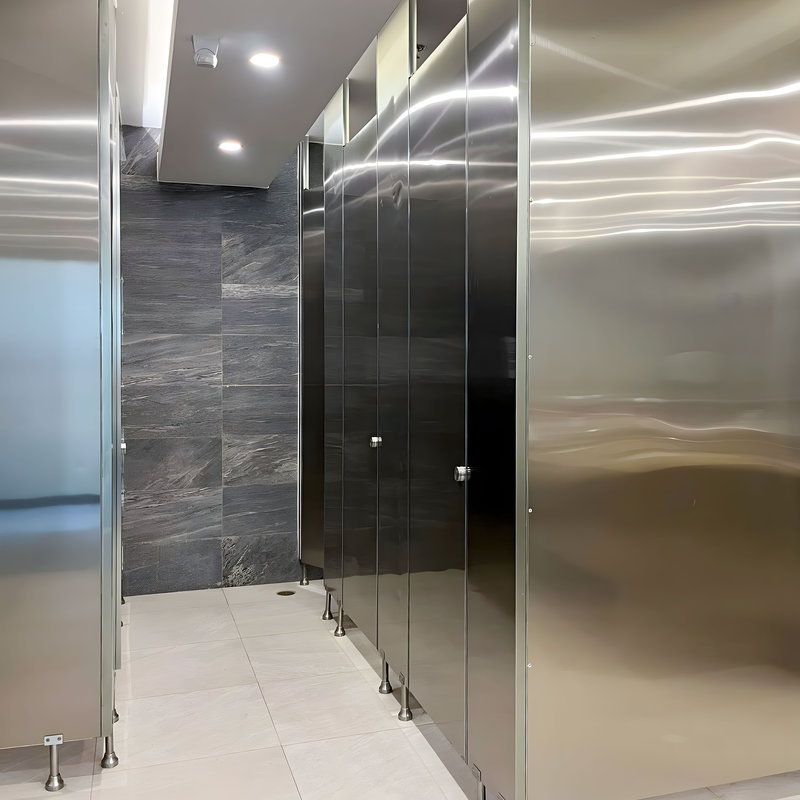
Powder coated steel is another excellent choice for toilet stall materials. It uses high-quality steel as the base material, and the surface is coated with a special powder coating which is cured at high temperature. I once helped a school select toilet stall materials, and finally chose powder coated steel because it has strong fire resistance. Schools have dense crowds, so fire safety is particularly important. Powder coated steel complies with the fire safety standard NFPA 286 formulated by the National Fire Protection Association. It will not catch fire easily when encountering an open flame, and can effectively block the spread of fire. In addition, this material is corrosion resistant. Even if it is splashed with cleaning agents or water for a long time, it will not rust. Dr. Emily Davis, a materials science researcher, pointed out that the powder coating on the surface of powder coated steel does not contain heavy metals or volatile organic compounds, which is safe for human body and friendly to the environment.
High density polyethylene HDPE is also a popular material for safe toilet stalls. This is a thermoplastic material with strong toughness and impact resistance. A gym I worked with used HDPE toilet stalls. The gym has a large number of users every day, and the toilet stalls are often collided accidentally, but HDPE can withstand these impacts without cracking. HDPE is completely waterproof, and its surface is smooth and non porous, so it is very easy to clean. Just wipe it with a disinfectant cloth to remove bacteria. The Environmental Protection Agency EPA confirms that HDPE is a recyclable material, which does not contain harmful additives such as bisphenol A, and meets the environmental safety standards. For families with children or public places with high hygiene requirements, HDPE toilet stalls are a very reassuring choice.
Key Safety Standards for Toilet Stall Materials
When selecting toilet stall materials, we must check whether they meet relevant safety standards. The ASTM D7334 standard is an important reference for plastic toilet stall materials. It specifies the requirements for material strength, moisture resistance and impact resistance. Materials that pass this standard can ensure that the toilet stall will not be damaged easily during use. For example, when a 5kg heavy object falls from a height of 1 meter onto the toilet stall panel, there should be no cracks or fractures. This is very important to prevent accidental injuries in the toilet stall.
Fire safety standards are also crucial, especially for public buildings. The NFPA 286 standard evaluates the fire performance of building materials, including whether the material will release toxic gases when burning and the speed of flame spread. Toilet stall materials that meet this standard can minimize the risk of fire accidents. In addition, the NSF ANSI 61 standard ensures that materials in contact with water will not leach harmful substances. Since the toilet stall is often in contact with water, complying with this standard can avoid water pollution and protect users’ health.
Why Safety and Hygiene of Toilet Stall Materials Matter
The safety of toilet stall materials is closely related to our health. Some low-quality materials on the market may release volatile organic compounds VOCs, which can cause symptoms such as headaches and respiratory discomfort after long-term exposure. I once encountered a family whose children had frequent skin allergies. After investigation, it was found that the formaldehyde content of the toilet stall materials they used exceeded the standard. After replacing them with qualified phenolic resin toilet stalls, the children’s allergy symptoms were significantly relieved. This case tells us that we must not cut corners on toilet stall materials. Choosing materials certified by authoritative institutions such as GREENGUARD can ensure that the content of harmful substances is within the safe range.
Hygiene is another key factor for toilet stall materials. The bathroom is a humid environment where bacteria and mold are easy to breed. If the toilet stall material is porous and easy to absorb water, it will become a hotbed for bacteria. The three materials mentioned above have smooth and non porous surfaces, which can prevent bacteria from adhering. According to a survey by the Centers for Disease Control and Prevention CDC, using non porous materials for toilet stalls can reduce the spread of bacteria such as Escherichia coli by more than 70%. This is particularly important in public places with large passenger flow, which can effectively prevent the cross spread of diseases.
Conclusion
Choosing the right materials for toilet stall is a decision that affects both safety and experience. Phenolic resin, powder coated steel and HDPE are all materials that meet strict safety standards. They have their own advantages in moisture resistance, fire resistance, non toxicity and hygiene, and can meet the needs of different scenarios such as homes, shopping malls, schools and gyms. When purchasing, we must check the certification of authoritative institutions to ensure that the materials comply with ASTM NFPA and other relevant standards. As someone who has been in the industry for many years, I sincerely suggest that we should not only pursue low prices when choosing toilet stall materials, but also pay more attention to safety and quality. A high-quality toilet stall can not only bring a comfortable experience, but also protect the health of ourselves and our families or customers. Let us choose reliable materials and build a safe and hygienic bathroom environment.


 EN
EN