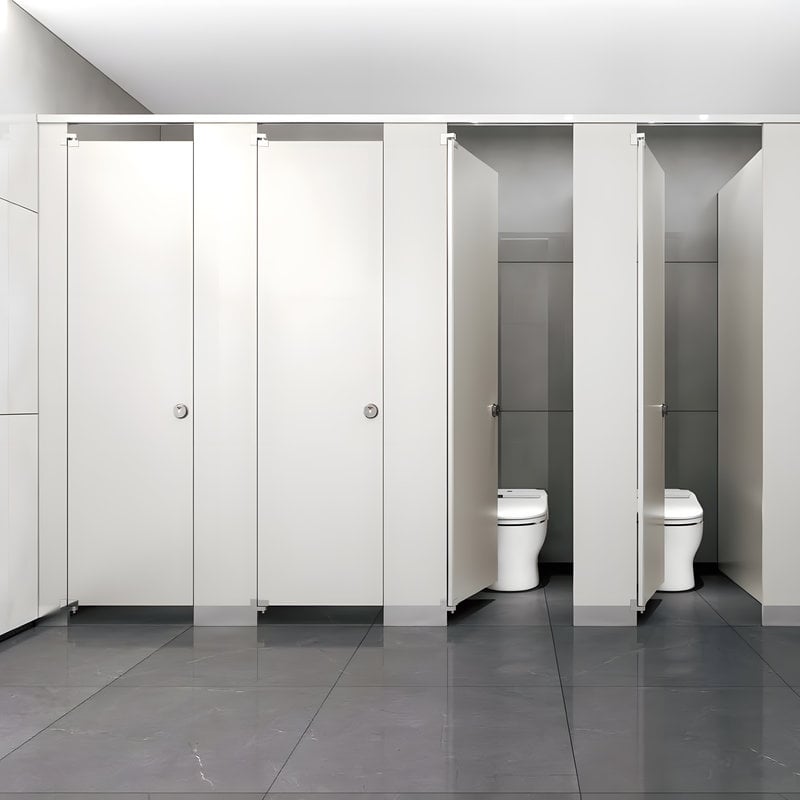
Privacy is one of the most important factors when it comes to public restroom stalls. No one wants to feel exposed while using a restroom stall, whether it’s in a mall, office building, restaurant, or any other public space. The height of restroom stalls plays a crucial role in delivering that sense of privacy—too short and users feel vulnerable, too tall and it might cause discomfort or safety concerns. Finding the ideal height is all about balancing privacy, comfort, and practicality. It needs to work for people of different heights, fit within the overall restroom design, and meet basic safety standards. Let’s explore what makes the perfect height for restroom stalls and why it matters so much for user experience.
Why Stall Height Is a Make or Break for Restroom Privacy
Restroom stalls that are too low are a common complaint in public spaces. Imagine walking into a restroom stall and realizing the partition only comes up to your shoulders—you can feel eyes on you, and there’s a constant worry that someone might see over the top. This lack of privacy can make users feel anxious and rushed, ruining their overall experience. On the flip side, restroom stalls that are excessively tall might feel claustrophobic, especially in smaller restrooms. They can also block airflow and make it harder for facility staff to monitor the space for safety issues like falls or emergencies. The ideal height for restroom stalls needs to eliminate those over-the-top glances while still feeling open and safe. It should create a enclosed space where users can relax and feel secure, knowing they’re not being watched. For public facilities, getting the height right is key to keeping customers, employees, or visitors happy and comfortable.
Standard Height Recommendations for Restroom Stalls
While there might be slight variations based on local building codes and specific needs, there are general standard heights that work well for most restroom stalls. For the partition panels (the sides and front of the stall), the ideal height is typically between 58 to 60 inches from the floor to the top of the panel. This height is tall enough to prevent most people from seeing over—even for taller individuals, the panel will cover their torso and upper body, ensuring privacy. The door of the restroom stall should match this height to maintain consistency and full coverage. For the gap at the bottom of the stall door and panels, it’s standard to leave a small space (around 1 to 2 inches) for ventilation, but this gap shouldn’t be so large that it compromises privacy. For accessible restroom stalls designed for people with disabilities, the height requirements are similar, but the overall stall size is larger to accommodate wheelchairs. These standard heights are based on years of feedback and user experience, striking the perfect balance between privacy and practicality for most public spaces.
Considering Different Users When Determining Stall Height
Restroom stalls are used by people of all ages and heights, from children to tall adults, so the ideal height needs to be inclusive. For children, the standard height still works because they’re shorter, and the panels will feel even taller to them, providing ample privacy. For taller individuals (over 6 feet), a height of 58 to 60 inches might feel a bit low, but going beyond 60 inches can start to cause issues with claustrophobia or ventilation. A good solution is to add a small extension or “kicker” panel at the top of the partition for restroom stalls in spaces with many tall users, like gyms or sports facilities. This extra few inches can provide that extra sense of privacy without making the stall feel too enclosed. It’s also important to consider the ceiling height of the restroom—if the ceiling is low, overly tall restroom stalls can make the entire space feel cramped. By taking into account the diverse range of users, facility managers can choose a height that works for the majority while still addressing specific needs.
Balancing Privacy with Safety and Practicality
Privacy shouldn’t come at the cost of safety or practicality when it comes to restroom stalls. Taller restroom stalls can make it harder for staff to check on the well-being of users, which is a concern in spaces like schools, hospitals, or senior centers. If someone falls or has an emergency inside a stall that’s too tall, it might take longer for others to notice. The ideal height allows for a quick visual check by staff (without invading privacy) while still keeping users covered. Practicality is another factor—restroom stalls need to be easy to clean and maintain. A height that’s too tall can make it difficult to reach the top of the panels for cleaning, leading to dust and grime buildup. It also affects the overall airflow in the restroom, which is important for reducing odors and moisture. By choosing a height that’s around 58 to 60 inches, facilities can ensure restroom stalls are private, safe, and easy to care for. It’s a balance that makes the restroom functional for both users and staff.
The Impact of Ideal Stall Height on Overall Restroom Experience
The height of restroom stalls might seem like a small detail, but it has a big impact on how people perceive a public restroom. A restroom with well-sized, appropriately tall restroom stalls feels more professional, clean, and user-friendly. It shows that the facility cares about the comfort and dignity of its visitors. On the other hand, restrooms with too-short stalls are often seen as unpleasant and uncaring, which can reflect poorly on the business or organization. For example, a restaurant with inadequate restroom stalls might lose customers, while an office with comfortable restroom stalls can boost employee satisfaction. The ideal height creates a positive experience where users don’t have to worry about privacy—they can use the restroom with peace of mind. It’s a simple yet effective way to improve the overall quality of a public space. Whether you’re designing a new restroom or renovating an existing one, taking the time to get the restroom stall height right is an investment that pays off in happier, more satisfied users.


 EN
EN