
Modern athletic locker customization centers on intelligent integration—balancing robust security with seamless user experience. Digital locks eliminate physical keys, reducing loss incidents by up to 40% while generating real-time access logs critical for accountability in high-volume facilities. Integrated USB-C charging stations address the operational reality that 78% of athletes rely on powered devices during training sessions (SportsTech Journal, 2023). Strategically positioned full-length mirrors support uniform checks and enhance spatial perception in compact locker rooms—proven to reduce perceived congestion and improve flow during peak transition times. Together, these features transform passive storage into an active component of athlete readiness.
Athletic lockers must endure relentless use: impact from gear, moisture from sweat and showers, and daily abrasion. Industrial-grade 16-gauge steel or non-porous phenolic resin—paired with antimicrobial, corrosion-resistant coatings—ensures structural integrity and hygiene in humid environments for 15+ years. Effective ventilation is non-negotiable for odor and pathogen control. Best-in-class systems combine perforated door panels for passive airflow, antimicrobial surface treatments, and base plenum systems that channel air upward—creating continuous circulation without mechanical fans. ADA compliance is both a legal mandate and a mark of inclusive design: 26% of athletes have mobility-related needs (U.S. Census Bureau, 2022), making wheelchair-accessible units—with compliant clearances, operable hardware heights, and unobstructed turning radii—not optional, but foundational.
K–12 athletic programs operate under tight budget cycles and evolving enrollment demands—requiring lockers that deliver long-term value without compromising safety. Impact-resistant materials, rounded edges, and non-toxic, low-VOC finishes meet stringent youth safety standards (ASTM F2057-23), while tamper-resistant locking mechanisms prevent injury and deter theft. Modular scalability allows districts to expand locker banks incrementally as sports participation grows—avoiding costly full-room overhauls. Well-engineered units typically exceed 15-year service life with minimal maintenance, cutting total cost of ownership by up to 30% compared to lower-tier alternatives (National School Facilities Association, 2023).
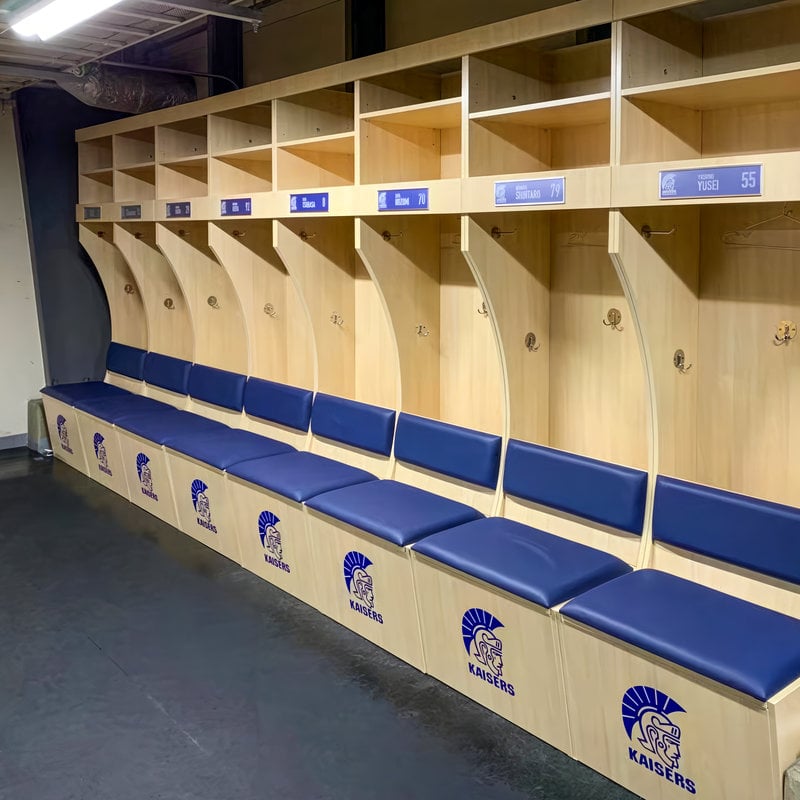
Collegiate and professional programs demand lockers built for performance, longevity, and program visibility. Moisture-resistant HDPE and powder-coated steel resist bacterial growth, corrosion, and odor accumulation—critical in high-humidity, high-turnover environments. Modular configurations scale precisely: from individual athlete pods to full-team banks, with compartment depths and widths tailored to sport-specific gear loads. Brand-ready options—including custom color matching, laser-etched nameplates, and integrated team logo panels—reinforce institutional identity for athletes, recruits, and visitors alike. These integrations also accelerate pre-practice workflows: standardized gear placement reduces equipment search time and supports consistent recovery routines across rosters.
One-size-fits-all lockers fail when managing sport-specific gear. Football lockers integrate helmet racks and dedicated hanging zones for shoulder pads—preventing scratches to uniforms and minimizing wear on expensive hard-shell equipment. Hockey lockers feature built-in, low-heat skate dryers that actively remove moisture post-use, inhibiting mold, extending skate blade life, and preserving padding integrity. Basketball lockers include recessed ball storage compartments that keep game and practice balls off the floor—eliminating tripping hazards and freeing floor space for dynamic pre-game warm-ups. A 2023 industry survey confirmed these configurations reduce pre-game equipment retrieval time by 28% and lower annual gear replacement costs by up to 15% through proactive damage prevention. Modular adjustability ensures layouts remain functional as team sizes, gear specs, or facility priorities evolve.
Custom branding transforms athletic lockers from utilitarian fixtures into intentional extensions of facility culture—reinforcing team values, school pride, or organizational mission. Coordinated color palettes, precision-etched logos, and branded accent panels create visual continuity across locker rooms, elevating the experience for athletes, staff, and guests. When paired with true modular architecture—where components snap together without welding or permanent fasteners—this branding investment gains long-term resilience. Facility managers can add capacity, reconfigure layouts for new sports or programs, or replace worn panels individually—avoiding full-bank replacements. This adaptability cuts operational waste, defers capital expenditures, and ensures storage infrastructure remains aligned with both brand identity and functional needs for decades.
What are the key security features included in modern athletic lockers?
Modern athletic lockers often feature digital locks that eliminate physical keys, provide real-time access logs, and enhance overall security while reducing incidents of loss.
How does ADA compliance impact athletic locker design?
ADA compliance ensures that lockers are accessible to individuals with mobility-related needs. This includes considerations like operable hardware heights, clearances, and turning radii to make the facilities inclusive for all users.
What materials ensure durability and hygiene in athletic lockers?
Industrial-grade 16-gauge steel, non-porous phenolic resin, and antimicrobial coatings protect lockers from impact, moisture, and corrosion while ensuring hygiene in humid environments.
How do custom branding and modular adaptability benefit athletic locker infrastructure?
Custom branding bolsters facility culture and team spirit, while modular adaptability allows easy reconfiguration, capacity expansion, and replacement of worn parts without needing a full overhaul.
What sport-specific features enhance usability in athletic lockers?
Sport-specific features include helmet racks for football, low-heat skate dryers for hockey, and recessed ball compartments for basketball, all designed to protect gear and streamline usage.

Since its establishment in 2001, Jialifu has been specializing in the design and manufacture of toilet cubicles, vanities, storage cabinets, IPS duct panels, and doors for commercial projects.
 EN
EN